
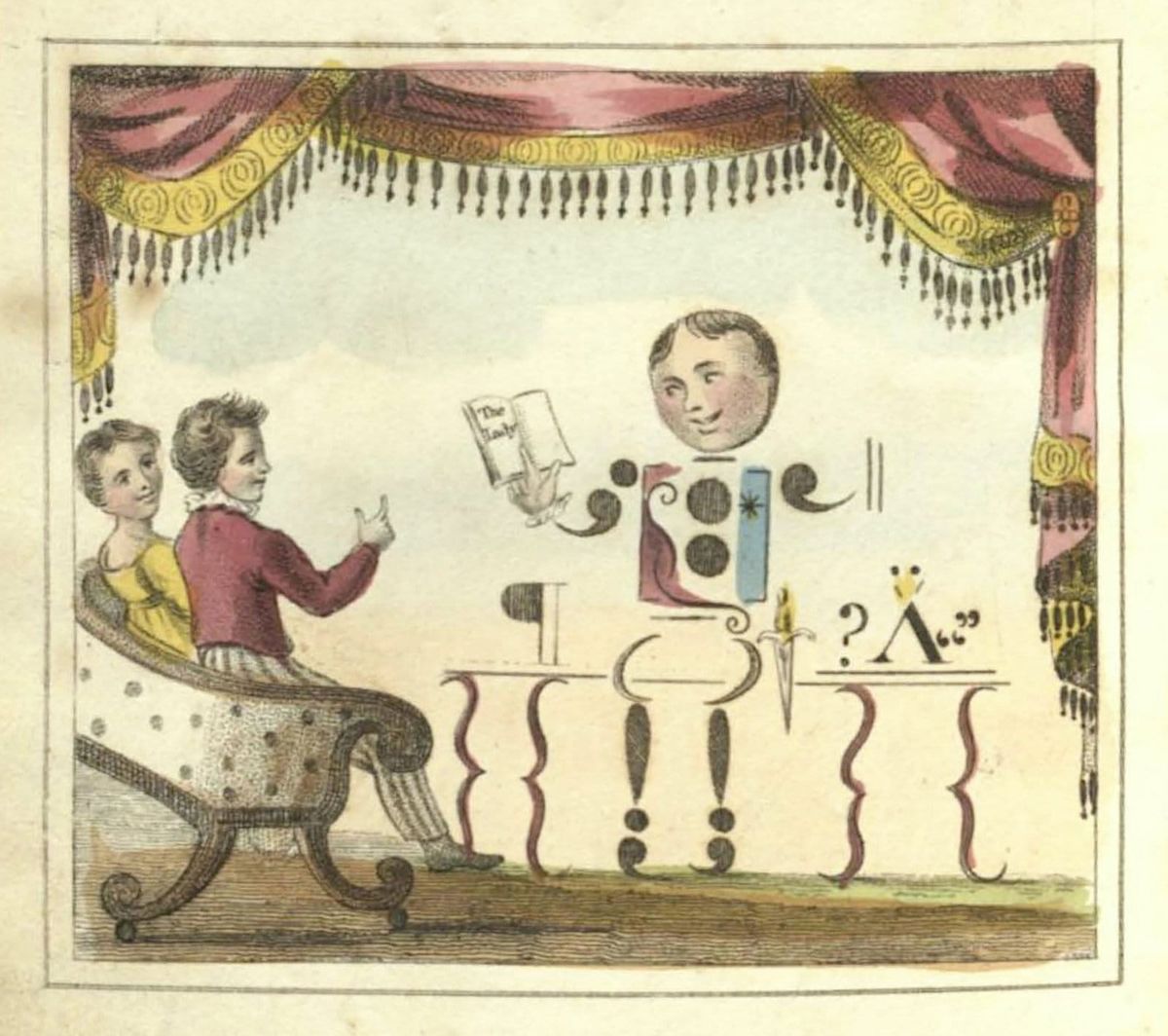
In 1824 a London publisher brought out a small book called Punctuation Personified, by the pseudonymous Mr. Stops, in which every mark of punctuation is a character with a costume and a temperament. The full stop is a round, contented face. The colon is a boy with two buttons for a waistcoat. The semicolon is an ensign, flag in hand, pausing only briefly before going on.
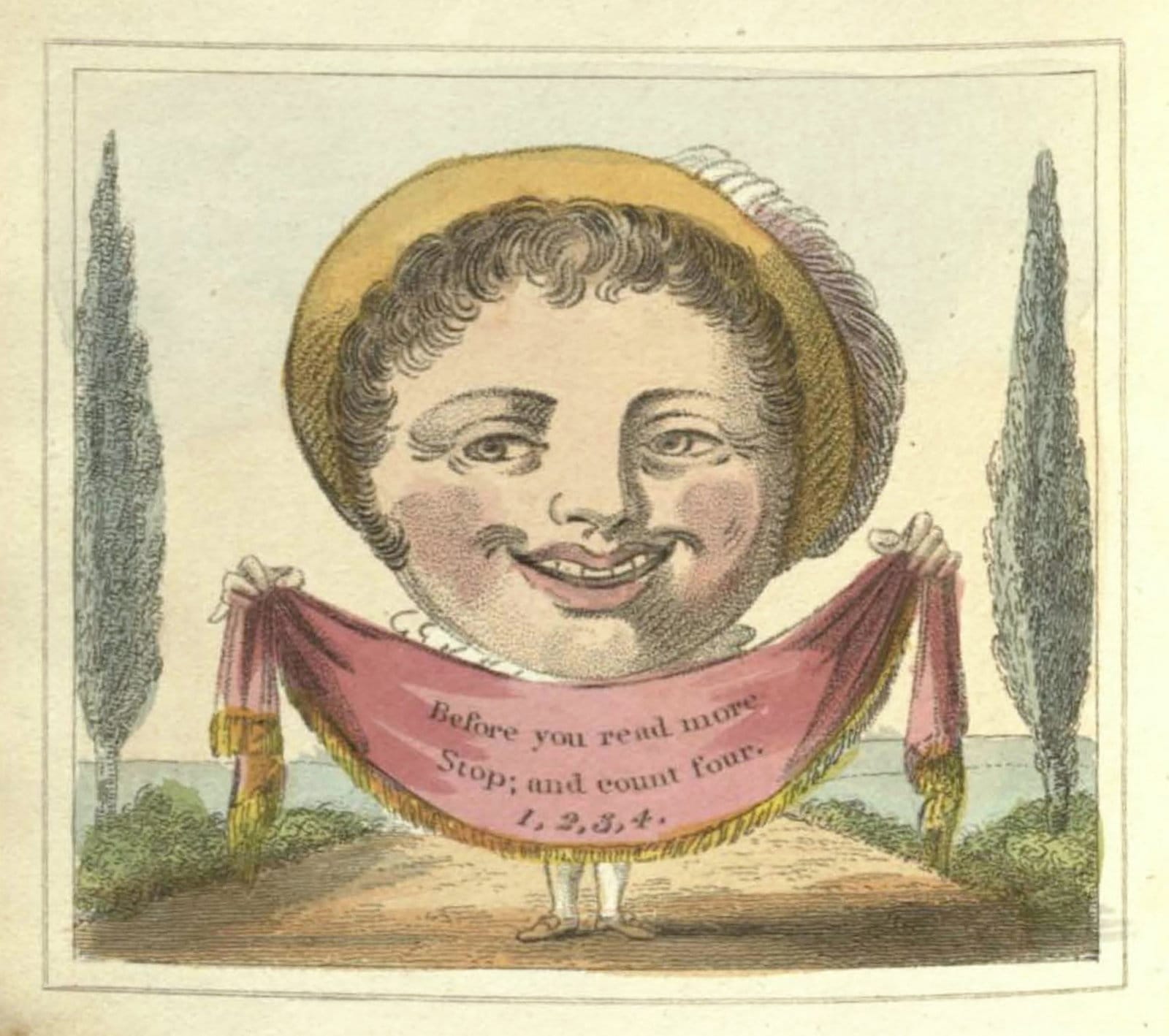
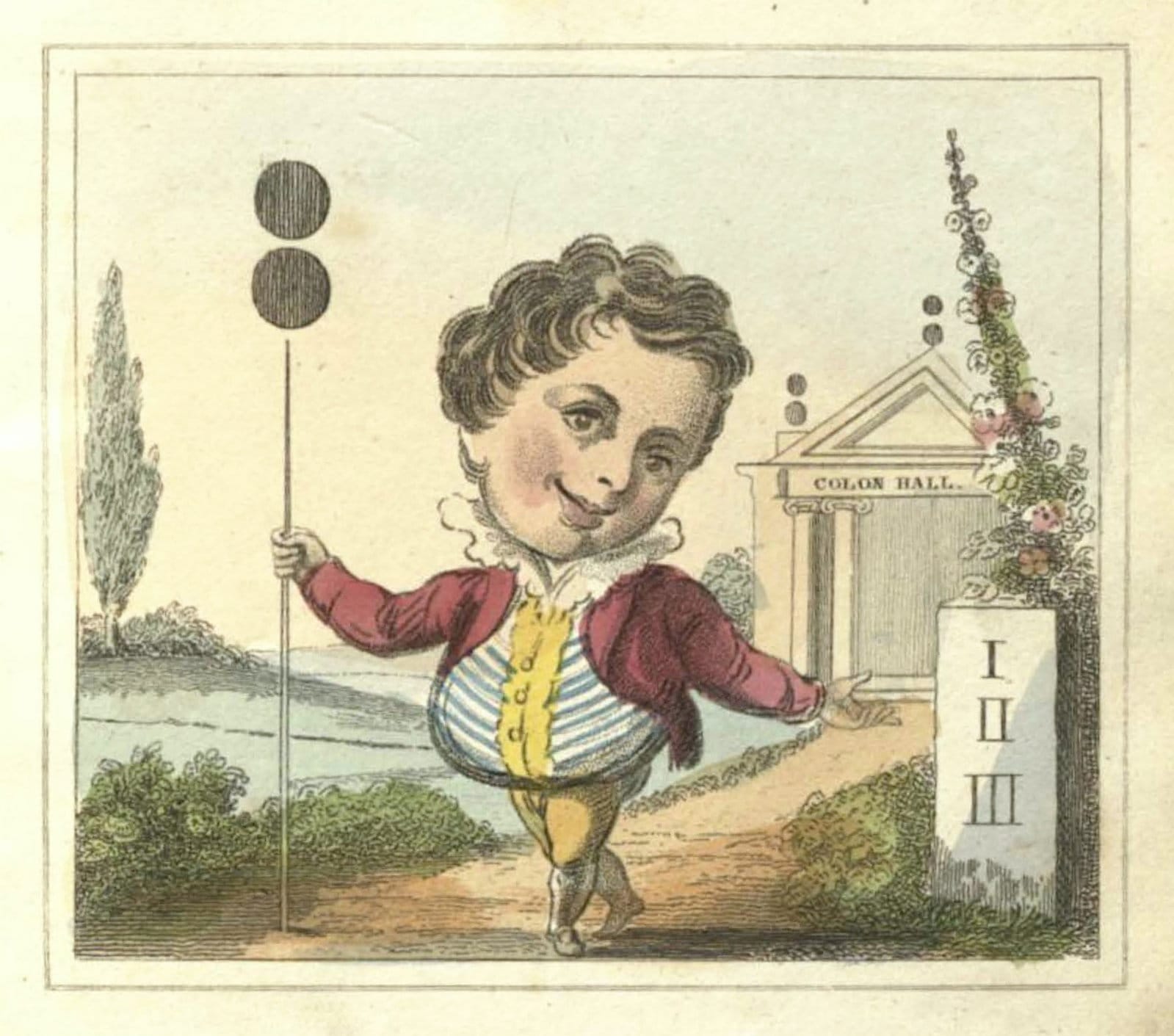
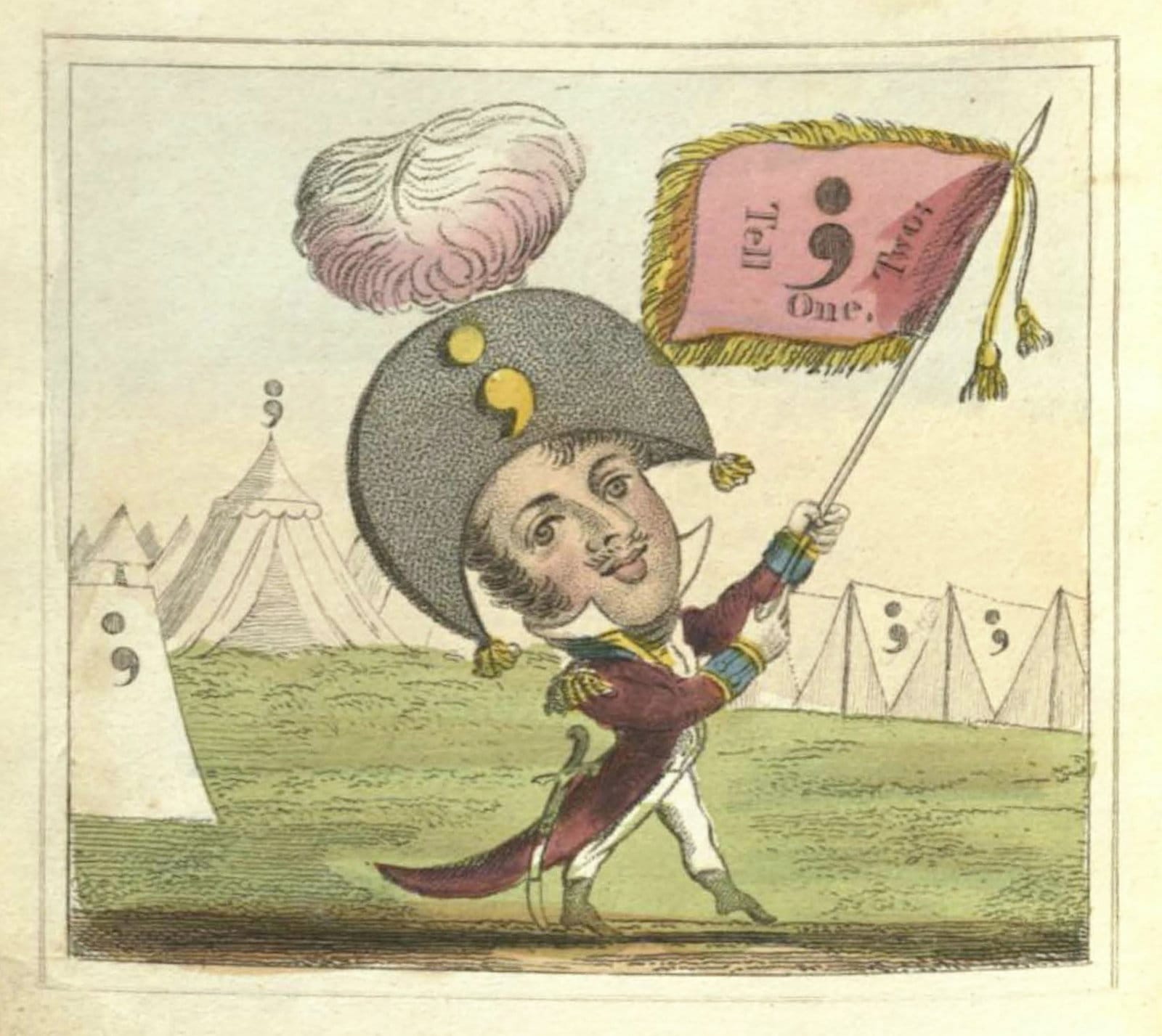
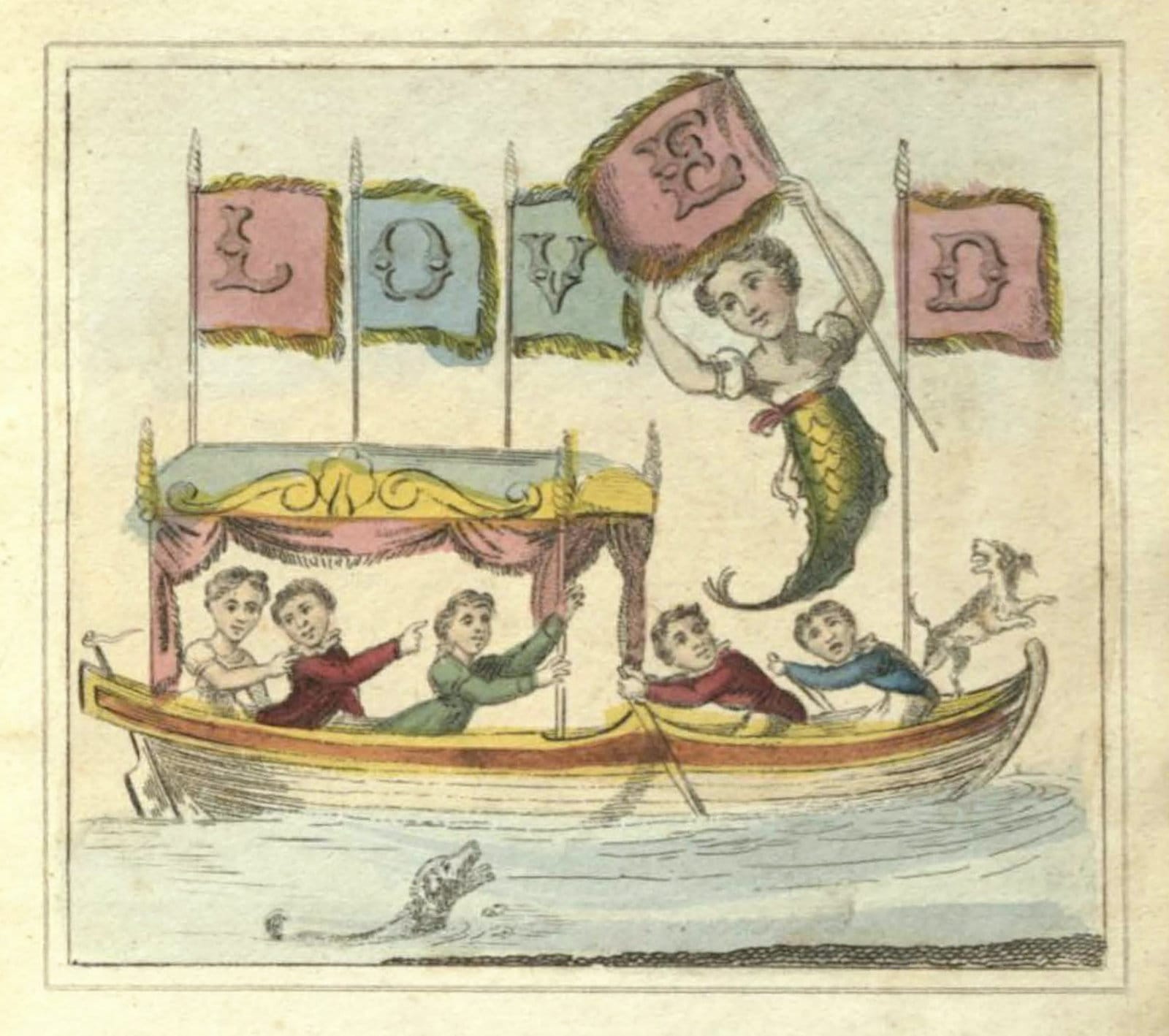
It was meant to teach children when to pause and for how long, and the verses that go with each picture count it out: one for a comma, two for a semicolon, three for a colon, four for a full stop. Nobody reads aloud like that now, if they ever did. But the idea underneath is a good one. Punctuation is not decoration. It is timing, and every mark is a small instruction about how long to wait before the next thought.
I have started to notice, when a sentence of mine feels wrong, that it is usually the stops and not the words.