
For several hundred years, educated readers kept a commonplace book: a notebook into which they copied passages worth remembering, sorted under headings of their own devising. On friendship. On the sea. On the shortness of life. It was not a diary and it was not a scrapbook. It was a way of reading with a pen in hand, so that reading became a kind of making.
I started keeping one again about two years ago, after realising that I could remember almost nothing of what I had read the year before. Not the plots, which come back easily enough, but the sentences. The particular arrangement of words that made me stop and read a line twice. Those were gone.
How mine works
There is nothing clever about it. A plain notebook, a pen that does not skip, and a few habits I have settled into:
- One passage per entry, with the author, the title and the page.
- No commentary on the same day. If I have something to say about it, I say it a week later, underneath.
- Headings are added afterwards, in the margin, when a pattern shows itself.
- An index at the back, kept in pencil, because it is always wrong.
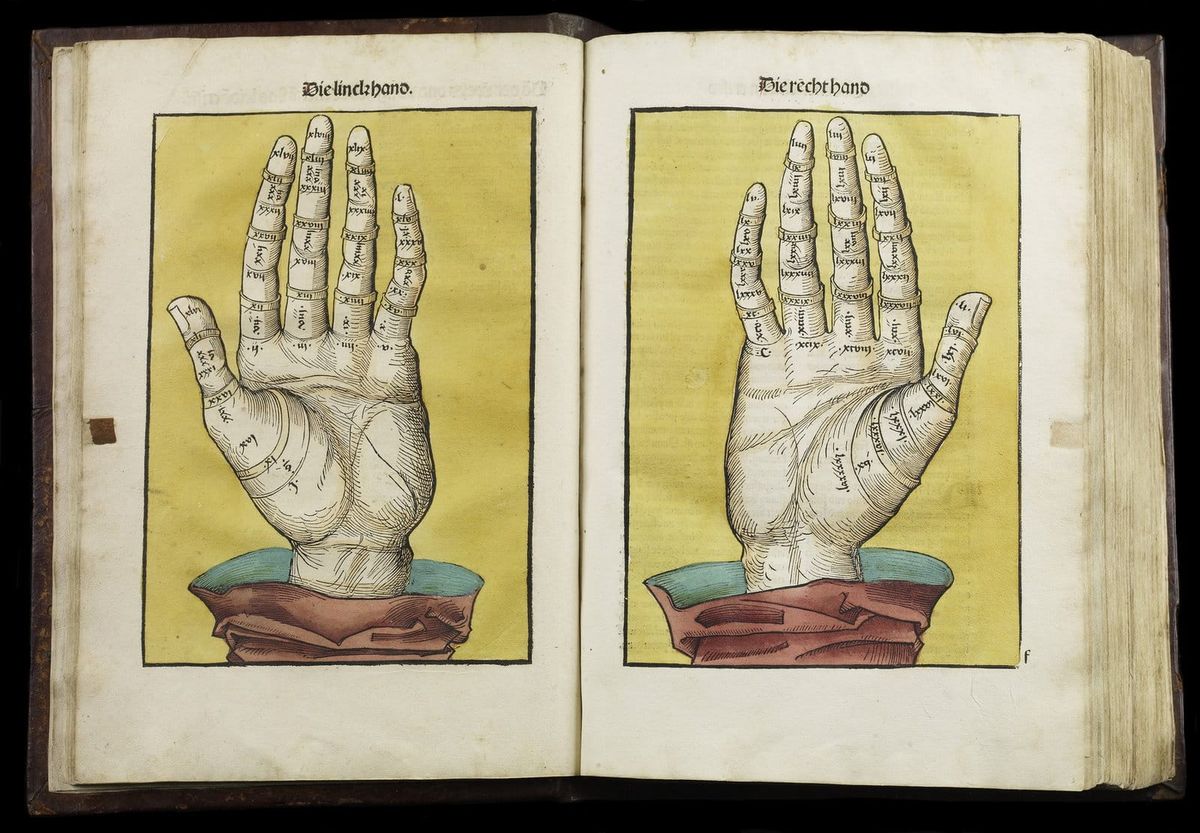
The index is the part I did not expect to enjoy. Readers have always needed help finding their way back: a Nuremberg devotional book of 1491 printed a pair of numbered hands so that its readers could remember where its contents lay, finger by finger. Every few months I go through the book and find that I have been circling the same handful of subjects without knowing it. Weather. Walking. Rooms. People being kind to each other in small ways. It turns out a commonplace book is less a record of what you have read than a portrait of what you were looking for.