
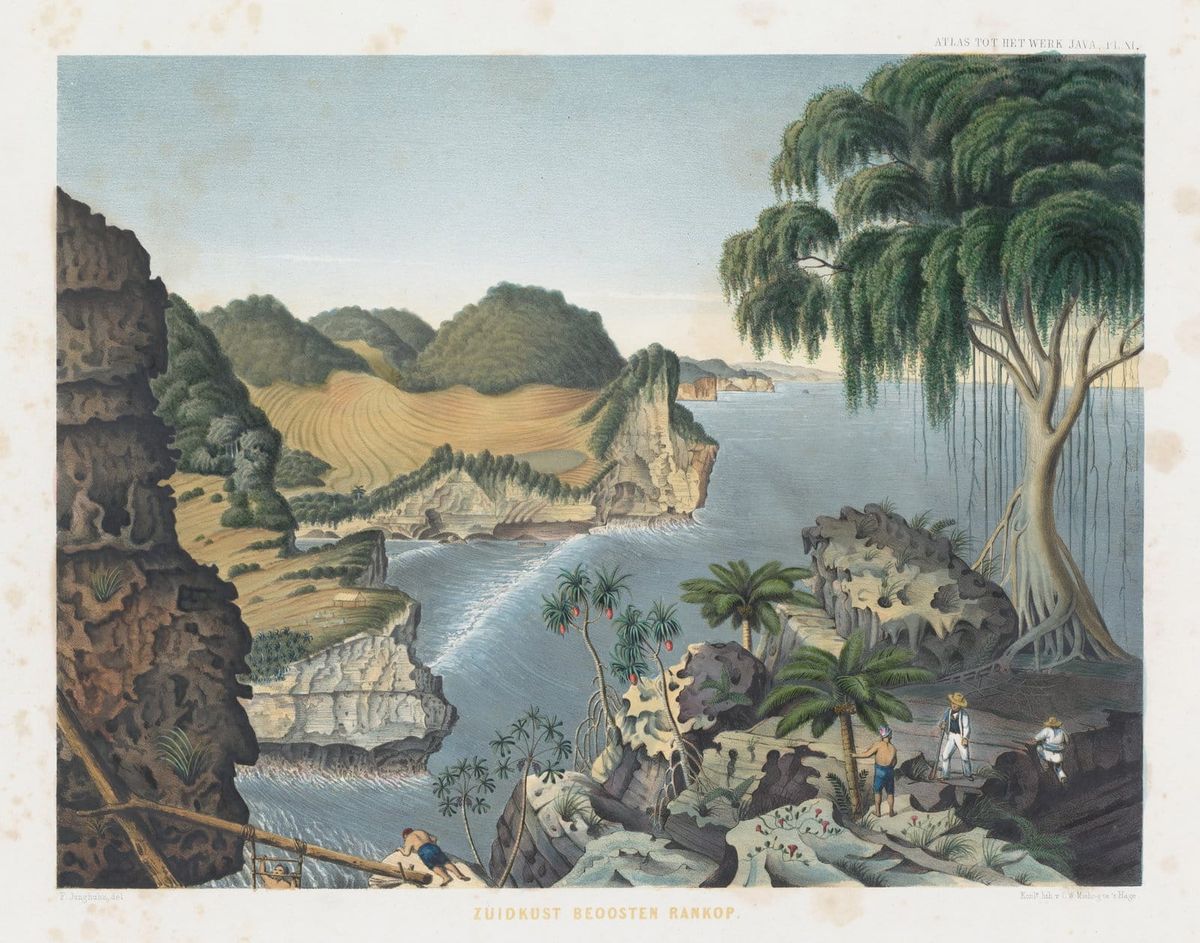
On the third day the wind came round to the west and stayed there. Everything leaned slightly. The grass on the dunes, the smoke from the one chimney in the one village, the people walking their dogs, all of it tilted a few degrees towards the land, as if the whole coast were listening for something.
I spent the morning in a harbour watching men stow sail on a boat that was not going anywhere. It seemed to me a strange thing to do with such care, folding and tying and checking, for a voyage that would not happen today. One of them saw me watching and said, without my asking, that you do it properly every time or you do it wrong the one time it matters. Then he went back to his knots.
I wrote that down. It is the best advice about writing I have heard in years, and it was not about writing at all.
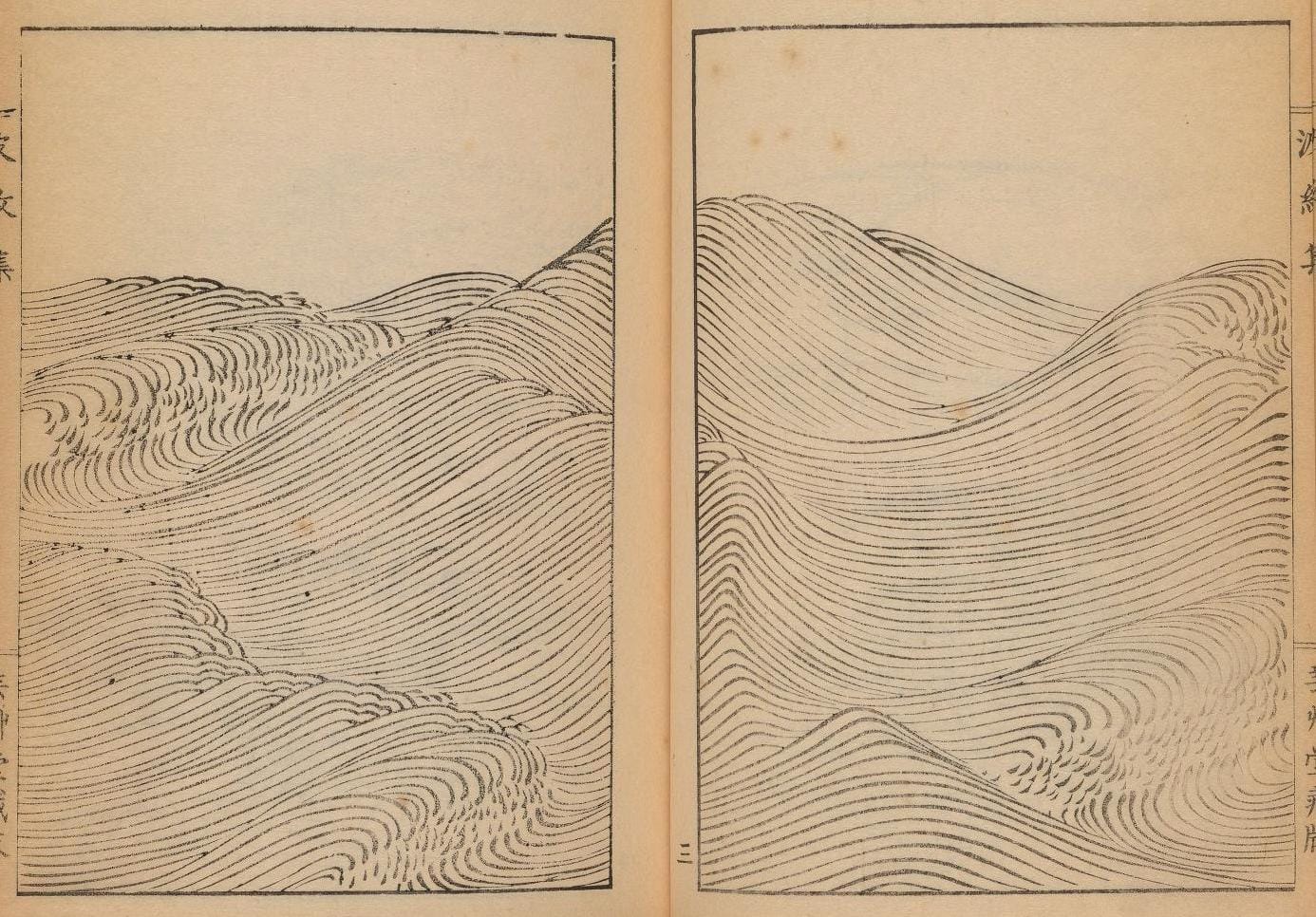
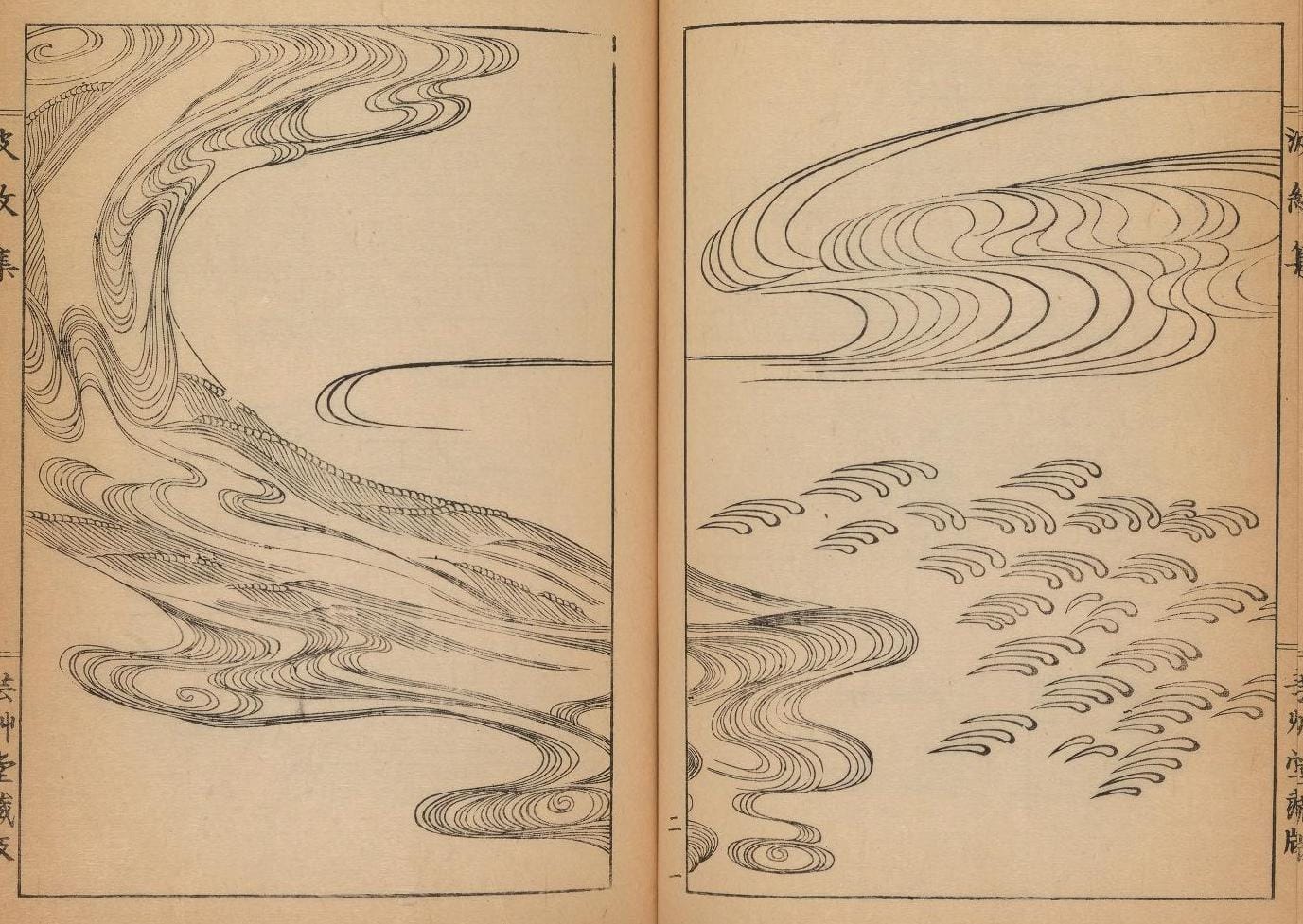
In the evening I found, in a second-hand bookshop above the harbour, a reprint of a Japanese pattern book from 1903: page after page of waves, drawn for craftsmen to copy onto lacquer and cloth. Some are calm, some are breaking, some are only foam. None of them is the sea, exactly, and all of them are more like it than any photograph.
Tide tables
There is a tide table pinned inside the door of every café on this coast, and nobody looks at it, because everybody already knows. The water comes in twice a day and goes out twice a day, a little later each time, and the whole life of the place arranges itself around that slow arithmetic without anyone needing to say so.
I like this about coasts. The rhythm is set from outside, by the moon of all things, and you either keep time with it or you get your feet wet. There is something restful in a schedule you cannot argue with.
This is part II of Along the coast, a series of notes from a week spent walking a stretch of shoreline. Continue with part III or go back to part I.